
Adult-use cannabis being legal at the state level doesn’t mean it’s legal everywhere. It’s a distinction and a common misconception that trips up more visitors than you’d expect. Many hikers and cannabis users assume that since it’s legal in New Jersey, it’s fair game anywhere outdoors. But it isn’t.
What you’re allowed to have in your pocket and what you can do with it fall under two different regulatory areas. That’s why understanding NJ cannabis laws ensures you fully grasp how the two are distinct from one another. The wilderness networks surrounding West Milford are a perfect example of where you draw that line.
Welcome to the modern era of outdoor compliance in Northern New Jersey, where the property line decides the legality of your session. Along the Route 23 corridor and throughout Passaic County, the trails, lakes, and forests worth visiting are almost entirely on public land. This puts them squarely outside the boundaries of where cannabis can legally be consumed. It can be surprising for newer consumers and hikers, but it’s something you need to understand before you hit the trailhead. This guide breaks down exactly where that boundary sits, park by park, so you can plan your day without any surprises.
The New Jersey Cannabis Regulatory Commission (NJ CRC) governs cannabis at the state level, but its authority over possession and consumption works in two different ways. An adult 21 or older can legally carry cannabis in most public spaces. Walking down a sidewalk, sitting in a parked car with a sealed product in the trunk, or riding transit are all fine under state possession rules.
But where that same adult is legally allowed to actually use the product is a much smaller list, which is governed by an entirely separate set of statutes layered on top of the CRC’s possession framework. This is the single most misunderstood part of NJ cannabis law, and it matters most once you’re on a trailhead.
The consumption of adult-use cannabis is confined to private residences or privately owned land. That’s the whole allowable footprint. No parking lot or scenic overlooks, however secluded they might feel. Plus, even within this private-property allowance, private property compliance is still layered on top: a landlord, HOA, or property management company can prohibit cannabis smoking or vaping on the premises entirely.
Renting doesn’t automatically guarantee a legal place to consume. So make sure to check your lease before assuming any place just qualifies. This matters especially for anyone renting a cabin or vacation property near West Milford, specifically for a hiking trip, since short-term rental agreements often carry their own smoking clauses that go beyond what state law requires.
New Jersey’s decriminalization of cannabis at the state level doesn’t override the rules that already govern local and state-owned land. Two separate laws work together here. The Cannabis Regulatory, Enforcement Assistance, and Marketplace Modernization Act (CREAMMA) bans the consumption of any cannabis product anywhere outside private property.
For smoking or vaping specifically, CREAMMA routes enforcement through the existing New Jersey Smoke-Free Air Act, where cannabis is treated exactly like tobacco. Smoking it in public is a civil violation governed the same way tobacco smoking is: prohibited anywhere smoking is already banned. This includes public parks and beaches, which means lighting up a product on a hiking trail or at a scenic lookout is a direct civil violation.
West Milford sits at the center of some of Northern New Jersey’s most heavily used public lands. Each of the major recreational properties in the area falls under the same statewide consumption restrictions. This consistency is actually useful to know as you won’t need to research each park individually before a trip, since the underlying rule doesn’t change from one property line to the next. Here’s how the local landscape breaks down:
| Regional Activity | Primary Terpene Target | Ideal Cultivar Profile | Sourcing Format |
|---|---|---|---|
| Backcountry Trail Trekking | Alpha-Pinene / Beta-Pinene | Uplifting sativa-dominant | Pre-packaged pre-rolls for a private post-hike reward |
| Deep-Water Kayaking | Limonene / Terpinolene | Balanced, high-clarity hybrid | Low-dose, fast-acting infused beverages |
| Lakeside Cabin Relaxation | Myrcene / Linalool | Calming, heavy indica | Solventless live rosin or slow-release edibles |
Since Hewitt is administratively managed through Wawayanda’s office, the two are often treated as a single enforcement zone. But the restriction applies independently to each property, regardless of how each is managed.
None of this means outdoor enthusiasts need to skip cannabis on hiking days entirely. It just means the timing shifts. The smarter approach is to bookend your trip: handle everything at home, after the hike, instead of mid-trail. A session with a premium cannabis flower menu at your own house keeps the entire excursion fully compliant, with nothing to manage once you’re on public land.
Post-hike is where topicals earn their place. High-grade balms, cooling gels, and targeted concentrates applied at home or on a private deck or inside a residence offer a smoke-free way to address sore muscles after a demanding day on the trails. This is all without ever raising a consumption question in the first place. Plus, a home-based routine like this comes with a few clear advantages over trying to manage anything in the field:
Getting your purchase to and from the trailhead comes with its own rules. Route 23 sees enough dispensary traffic on weekend mornings that it’s worth knowing them before you’re pulled into a conversation with a state trooper. New Jersey’s open container law applies to cannabis exactly as it does to alcohol. All products need to stay sealed and completely out of the driver’s reach while the vehicle is in motion.
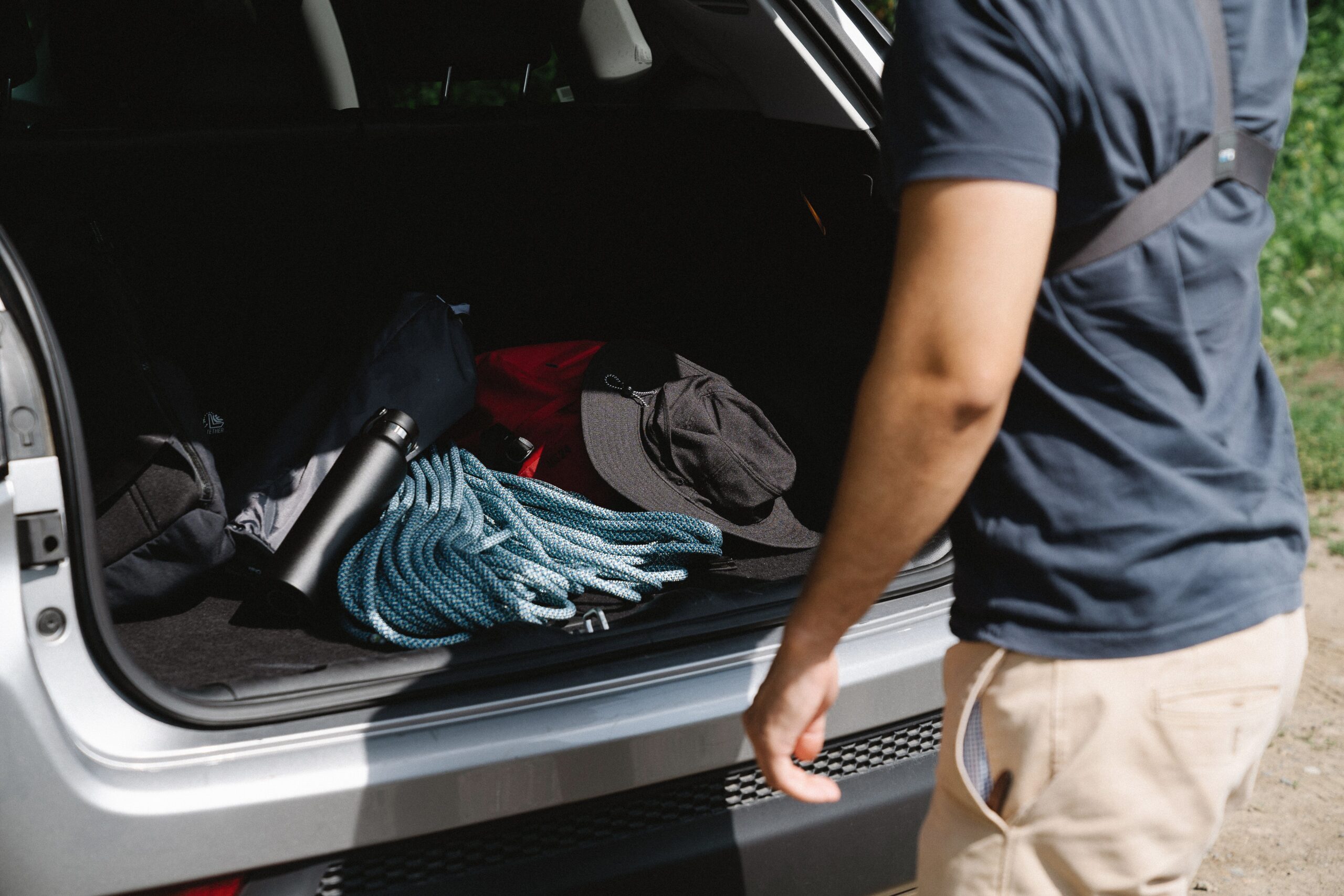
In practice, this means keeping everything in its original packaging and stored in the trunk, unexposed and out of reach. Not the console or an open bag on the passenger seat. A resealed jar or a rolled-down bag technically counts as “open” for enforcement purposes, so it’s worth resisting the temptation to peek at your purchase until you’re actually parked at your destination.
This applies whether you’re headed to a trailhead, back to a private residence, or anywhere in between. The rule doesn’t distinguish between a quick 5-minute drive and a longer trip. While this guide is focused on consumption boundaries, it’s worth knowing this too: operating any motor vehicle under the influence of cannabis carries the same severe criminal exposure as any other DUI charge under New Jersey traffic law. It doesn’t matter where you’re headed. That standard applies equally to a short drive down Route 23 and a longer trip back from a full day on the trails.
Cannabis products are more fragile than they look, and a hiking pack is a genuinely rough environment for them. Premium flower, delicate concentrates, and edibles are all sensitive to heat, direct sunlight, and moisture, which are all conditions a backpack tends to generate over the course of a few hours on the trail. This is especially true on a warm afternoon when internal pack temperatures can climb well above the ambient outdoor temperature. Carrying them inappropriately while you’re hiking in Passaic County can reduce their quality.
Cannabinoids and terpenes both degrade under sustained heat and UV exposure, which means a product that looked and smelled great when you left home can come back noticeably diminished after a full day outdoors. A few habits also go a long way toward keeping your batch in good shape once you’re back home, including:
The wilderness around West Milford is worth the trip, but it comes with a clear line under NJ cannabis laws: you can carry, but you can’t consume. Not on the trail, not at the scenic overlook, not anywhere on public land. Once that boundary is understood, planning around it is simple. Handle your session at home after the hike, keep everything sealed in transit, and the entire outdoor experience stays exactly as compliant as it should be.
Stop guessing about public consumption boundaries and keep your outdoor adventures entirely compliant. Use this guide to plan your next hiking trip properly. Plus, browse Elevated Herb’s fully authorized, lab-tested online menu today to explore premium adult-use products and cross-reference state-certified lab results. You can also coordinate a swift in-store pickup at our Route 23 showroom before heading back to your private West Milford residence!
No. Even at a designated, paid campsite, Wawayanda remains state-owned public land. New Jersey’s Cannabis Regulatory, Enforcement Assistance, and Marketplace Modernization Act (CREAMMA) bans public consumption of all cannabis products. This applies across the entire park, including the camping areas.
Smoking or vaping cannabis on public trails is governed by the New Jersey Smoke-Free Air Act, which carries a tiered fine structure: $250 for a first offense, $500 for a second, and $1000 for each offense after that. Other forms of consumption, like eating an edible on a trail, are under local municipal ordinances, so there are currently no uniform, statewide penalties.
No. New Jersey’s open container law extends on cannabis, meaning any unsealed product accessible within the passenger compartment is a violation. Products need to remain sealed in their original packaging and be stored out of reach, ideally in the trunk.
Yes. The Smoke-Free Air Act specifically targets smoking and vaping cannabis. But the CREAMMA bans public consumption of cannabis in every form, including ingestibles, edibles, and lozenges. So, eating an edible on a park bench is still illegal, even though it wouldn’t trigger a Smoke-Free Air Act violation.
Out-of-state visitors can legally purchase from a licensed New Jersey dispensary with a valid ID showing they’re 21 or older. But purchasing doesn’t change where consumption is legal. The same public land restrictions apply to visitors and residents alike, so private property is still the only compliant place to consume.